At a Glance
You finally finished your basement remodel, but the old TV looks tiny on that big back wall. You want that true cinema feeling, but the thought of replacing expensive bulbs every two years or listening to a loud cooling fan makes you hesitate. Most people jump into the world of big screens without realizing that traditional technology often gets dim and yellowed long before the hardware actually fails.
Buying the wrong light source for your room results in a washed-out image that struggles against even the smallest lamp. An led projector solves these problems by using solid-state technology that stays bright and vibrant for a decade or more. It provides the colors you want without the high maintenance costs of older lamp-based units.
This guide helps you navigate the technical specs so you can find the right led projector for your specific room and budget. We will explain how lumens affect your picture quality, why throw distance changes your installation plan, and which smart features actually matter for your daily viewing.
Find Your Perfect Display at DAVE
Stop by our showroom to see the latest home theater technology in action and get expert advice for your custom setup.
Shop Projectors OnlineWhat Is an LED Projector and How Does It Work
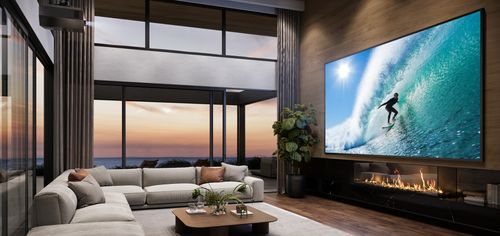
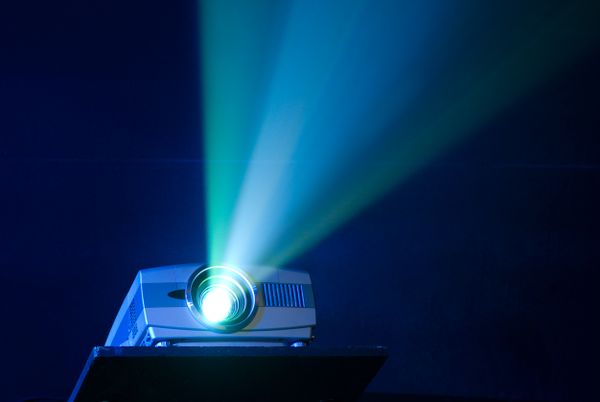
An led projector uses individual red, green, and blue light-emitting diodes to create an image instead of a single high-pressure bulb. These light sources are part of a solid-state system that shines through or reflects off a chip, such as a DLP or LCD panel. This process is much more efficient than old-school tech because it creates specific colors directly at the source. Most modern units offer a wider color gamut, which means the reds look deeper and the greens look more natural compared to standard lamp models.
The biggest win for your wallet is the light source lifespan. Traditional lamps usually last about 3,000 to 5,000 hours before they dim or pop. In contrast, an led light engine is rated for 20,000 to 30,000 hours. If you watch a four-hour movie every single night, the light source could last you over twenty years. You never have to worry about the long lasting projector bulb failing in the middle of a big game or a movie premiere.
Heat management is another area where these units shine. Because diodes are more efficient, they produce much less heat than a glowing filament. This allows manufacturers to use smaller, quieter cooling fans. You won't have to crank the volume on your speakers just to drown out the whirring of the machine sitting above your head. It makes the entire viewing experience more immersive and comfortable.
At the showroom, we see many customers switch to LED because they want a "set it and forget it" solution. There is no downtime for maintenance, and the colors do not shift or fade over time. The instant-on capability is also a major plus. You do not have to wait two minutes for a bulb to warm up; your movie starts as soon as you hit the power button.
LED vs Laser vs Lamp Projectors Head to Head
| Feature | LED Projectors | Laser Projectors | Lamp Projectors |
|---|---|---|---|
| Lifespan | 20,000 - 30,000 Hours | 20,000 - 30,000 Hours | 3,000 - 5,000 Hours |
| Brightness | 1,000 - 3,000 ANSI Lumens | 3,000+ ANSI Lumens | 2,000 - 5,000 ANSI Lumens |
| Heat & Noise | Very Low / Quiet | Low / Moderate | High / Loud Fans |
| Color Quality | Highest Accuracy | High / Sharp | Good / Standard |
| Relative Cost | Mid-Range | High / Premium | Low Initial / High Maintenance |
Why Brightness and Lumens Matter for Your Space
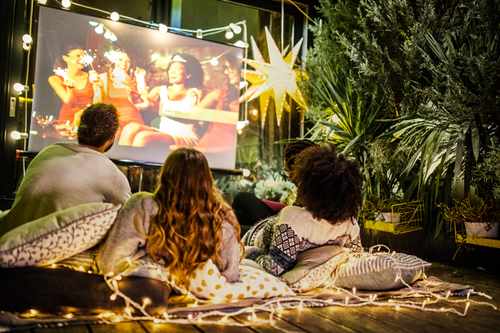
Brightness is the most misunderstood part of choosing a display. Most manufacturers list their specs in ANSI lumens or ISO lumens, which are standardized measurements of light output. If you are putting a projector in a dedicated theater with no windows, you do not need the highest numbers on the box. In a dark room, 1,500 lumens provides a punchy, high-contrast image that looks better than a brighter unit that washes out the black levels.
The situation changes when you move to a multi-purpose living room. Windows and lamps create ambient light that competes with the projected image. For these spaces, the lumens needed for projector success usually start at 3,000 or higher. Without that power, your Sunday afternoon football game will look grey and faded. High brightness helps the colors cut through the glare, though we still recommend using blackout curtains for the best results.
Screen gain also plays a part in how bright your image looks to your eyes. A screen with a gain of 1.2 reflects more light back at the seating area than a standard white wall. We often suggest pairing a smart led projector with a gray-tinked screen if you have light-colored walls. This combination helps keep the blacks deep while letting the LED highlights pop.
We recommend checking the brightness in the specific "Cinema" or "Film" mode rather than the "Dynamic" mode. Manufacturers often inflate their lumen claims by using a green-tinted high-brightness mode that looks terrible for movies. A quality led vs laser projector comparison usually shows that LED units hold their color better at lower brightness levels. This creates a more balanced picture that feels like a real movie theater.
Understanding Throw Distance and Room Size Requirements
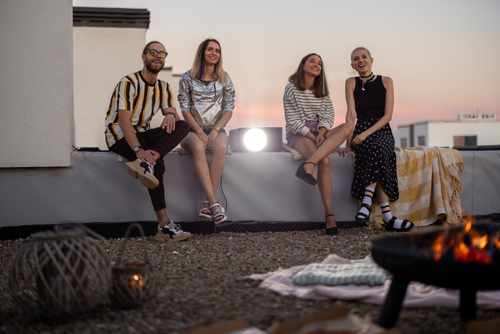
The throw distance tells you exactly where the unit needs to sit to fill your screen. This is determined by the throw ratio, which is the math between the distance from the wall and the width of the image. If you have a deep room, a standard throw unit works great. However, many people find that a standard lens gets blocked when someone walks to the kitchen for snacks.
Short Throw and Ultra-Short Throw Options
A short throw led projector is perfect for medium rooms where you want the hardware closer to the wall. These lenses can create a 100-inch image from just five or six feet away. This keeps the light beam in front of the seating area, so nobody casts a shadow on the screen. It is a great middle ground for gaming setups or smaller dens where space is limited.
For tight spaces or apartments, ultra-short throw models are the top choice. These units sit on a media console directly under the screen, just inches from the wall. They take the place of a traditional TV without the need for ceiling mounts or long cable runs. It makes a projector screen size guide much easier to follow because you are not fighting the physical layout of your room.
- Standard Throw: Best for large rooms with ceiling mounts.
- Short Throw: Ideal for coffee table placement in 10-foot rooms.
- Ultra-Short Throw: Great for replacing a TV on a standard cabinet.
- Optical Zoom: Helps fine-tune the size without moving the hardware.
When we install these units, we always leave at least four inches of space behind the rear intake to prevent the internal sensors from throttling the brightness due to heat. Proper airflow is the best way to make sure your hardware reaches its full rated lifespan. Even though LED runs cool, those internal components still need to breathe.
Resolution and Image Quality 1080p vs 4K Options
Most people assume more pixels always means a better picture. While a 4k led projector offers incredible detail on a 120-inch screen, a native 1080p unit can still look fantastic if the contrast is high. At smaller screen sizes, the difference in sharpness is hard to see from the couch. However, once you go over 100 inches, the higher pixel density of 4K becomes very obvious in fine textures like clothing or skin.
You will often see two types of 4K: native and pixel-shifting. Native 4K uses a chip with over eight million actual pixels. Pixel-shifting takes a 1080p chip and flashes the image multiple times per second in different positions to simulate a 4K image. To most eyes, pixel-shifting looks nearly identical to native 4K but keeps the price much lower. It is a smart way to get high-end performance without the massive price tag.
Contrast ratio is actually more important than resolution for that "wow" factor. This is the difference between the darkest black and the brightest white. Because LED light can be dimmed very quickly, these projectors often have better dynamic contrast than lamp models. This results in deep blacks and bright highlights that make the image feel three-dimensional.
Adding HDR10 support takes this image quality a step further. High Dynamic Range allows the projector to show more detail in the shadows and the brightest parts of the sun at the same time. When you combine HDR with the natural color accuracy of LED, you get a picture that rivals many high-end flat-screen TVs. It makes a huge difference when watching modern blockbusters or nature documentaries.
Essential Connectivity and Smart Features to Look For
Your led projector for home theater needs to talk to all your other gear. HDMI 2.1 is the current standard you should look for, especially if you have a new gaming console. This port supports higher data speeds and features like eARC, which sends high-quality audio back to your soundbar or receiver. It simplifies your wiring by letting one cable handle both the picture and the sound.
Gaming is a major reason people switch to LED. A dedicated input lag projector gaming mode can drop the delay between your controller and the screen to under 16 milliseconds. This is vital for fast-paced shooters or racing games where every frame counts. Some models even support 120Hz or 240Hz refresh rates, making the motion look buttery smooth compared to a standard TV.
- HDMI 2.1: Necessary for 4K at high refresh rates.
- eARC Support: Simplifies audio connections to soundbars.
- USB Power: Lets you plug in streaming sticks directly.
- Optical Out: Good for older audio receivers.
Built-in smart operating systems are becoming standard. Having Netflix, Disney+, and YouTube right on the projector means you don't need extra boxes cluttering up your room. These systems usually include voice control and easy screen mirroring from your phone. Just make sure the OS receives regular updates so your favorite apps keep working for years to come.
Home theater installation involves more than just plugging things in. You need to consider where your cables will run and if your Wi-Fi signal is strong enough at the projector's location. We often suggest a hardwired ethernet connection for anyone planning to stream 4K content to avoid buffering.
LED Projector Pros and Cons
LED technology offers a modern way to get a massive screen without the traditional headaches of high-heat bulbs. While it is the perfect fit for many homes, there are a few trade-offs to keep in mind before you buy.
Pros
Color Accuracy
Offers incredible color accuracy right out of the box.
Low Maintenance
Requires zero bulb replacements over the life of the unit.
Instant On/Off
Starts up and shuts down almost instantly.
Quiet Operation
Produces very little fan noise during quiet movie scenes.
Consistency
Maintains consistent brightness levels for years of use.
Cons
Initial Investment
Costs more upfront than basic lamp-based models.
Peak Brightness
Features lower peak brightness than some high-end laser units.
Repair Difficulty
Can be difficult to repair if an individual diode fails.
Experience the Best LED Projectors In-Store at DAVE
Choosing an led projector means investing in a decade of high-quality entertainment without the stress of constant maintenance. This technology provides the best balance of color, longevity, and quiet operation for most modern living rooms and theaters. By matching the lumens to your space and picking the right throw distance, you can transform any blank wall into a cinema.
We invite you to visit DAVE to see these displays in person. Shopping at an independent retailer like ours gives you access to expert showroom help that big-box stores simply cannot match. We don't just sell you a box; we offer professional installation and local service to ensure your system works perfectly from day one. Let our team help you design the ultimate outdoor led projector setup or a dedicated indoor theater that fits your lifestyle.
Frequently Asked Questions about Buying an LED Projector
Most LED projectors are rated to last between 20,000 and 30,000 hours of total use. This lifespan is significantly longer than traditional lamps and means you can watch movies daily for over a decade without needing a replacement.
An led projector is capable of daylight viewing if it has a high lumen rating, typically 3,000 ANSI lumens or more. For rooms with heavy sunlight, we suggest using light-rejecting screens to keep the image from looking washed out.
You do not strictly need a special screen, but using a dedicated surface will greatly improve your contrast and color accuracy. High-quality screens help manage ambient light and provide a much smoother texture than a standard painted wall.
Yes, you can play games on an led projector as long as the model features a low input lag mode. Many modern units are designed specifically for gamers with high refresh rates and fast response times that rival gaming monitors.
The primary difference is the light source, where LED uses diodes for color and laser uses concentrated beams for higher peak brightness. While led vs lamp projector comparisons favor LED for color, laser is often the choice for extremely large, bright rooms.
The required distance depends entirely on the lens, ranging from just a few inches for an ultra-short throw to over twelve feet for standard models. You should check the specific throw ratio in a projector screen size guide to find the exact placement for your room.
Why Trust DAVE?
With 25 years of experience in sales, design, and installation, DAVE has built a reputation for quality, expertise, and customer care. Unlike other retailers that rely on subcontractors, our in-house installation teams ensure precision and professionalism in every project. Our non-commissioned sales staff focuses on educating customers—without the jargon—so you can make informed decisions. Through ongoing training and strong vendor relationships, we stay ahead of industry trends, offering the latest technology at the best prices. Plus, with our 30-day price guarantee, you get top-tier service and the lowest price, every time. For expert advice and professional installation in Buffalo and Rochester, New York, visit Dave Digital and take the first step toward transforming your home.
Shop AV Solutions at DAVE
At DAVE, we make shopping easy with a wide range of in-stock products, financing options, and professional delivery & installation to ensure a seamless experience. Whether you're a homeowner, business owner, builder, or designer, we offer expert support for residential solutions and commercial solutions, repairs, and custom solutions. Take advantage of our exclusive member perks, special promotions, and clearance/outlet catalogs for unbeatable deals. Need help? Submit a form online, and our team will assist you with finding the perfect products. Shop smarter with DAVE—where quality, service, and savings come together!