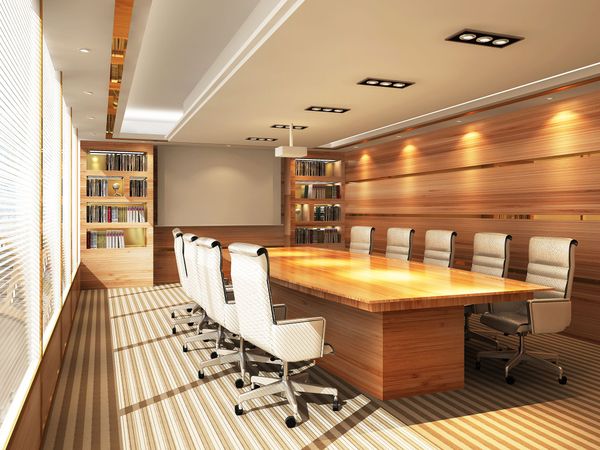
At a Glance:
LED Retrofits: The Foundation of Sustainable Commercial Lighting
Smart Commercial Lighting Control Systems: The Future of Automation
Architectural Accent Lighting: Elevating Brand Aesthetics
Task Lighting for Workspaces: Enhancing Employee Focus
The Benefits of Human Centric Lighting for Workplace Productivity
Have you ever noticed how the lighting in a room can completely change your mood? A dim, flickering workspace can make you feel tired before you've even had your coffee. A bright, vibrant space, on the other hand, energizes and inspires. The power of commercial lighting goes beyond just helping you see; it sets the entire tone for a business.
Today, smart businesses view lighting as a strategic asset. It's an investment in employee well-being, a tool for energy savings, and a way to define a brand's identity. By upgrading to modern solutions, companies can cut costs and create environments where people truly want to be.
Learn More About Business Tech Solutions
Enhance your business with the latest technology, providing employees, customers, students, or members with the best experience.
Business SolutionsLED Retrofits: The Foundation of Sustainable Commercial Lighting

The journey to a modern facility often starts with LEDs. Older lighting systems were inefficient and demanded frequent replacement. Commercial lighting retrofits offer immediate savings without needing a full remodel. These upgrades are a key part of today's commercial AV and automation solutions.
A retrofit can involve updating lamps or replacing entire fixtures. The impact is immediate:
- Energy Reduction: LEDs can reduce lighting energy use by up to 60%.
- Cost Savings: Lower energy consumption leads to smaller utility bills.
- Reduced Maintenance: LEDs last longer, which minimizes replacement costs.
This upgrade is the cornerstone of sustainable commercial lighting, cutting both energy use and maintenance needs.
How to Plan an LED Retrofit That Pays Off
A successful retrofit follows a clear plan.
Step 1: Audit the current commercial lighting inventory
First, inventory your existing lighting. Count all fixtures, identify lamp types and wattages, and note problem areas with flickering, glare, or dimness.
Step 2: Pick the right LED approach
Next, decide on an upgrade strategy. Options range from a simple lamp swap to using a retrofit kit or a full fixture replacement, which offers the best long-term performance.
Step 3: Specify performance, not just “LED”
Define the quality of light needed. Consider key metrics like CRI for color accuracy, CCT for color temperature, and UGR for glare control, especially in office and retail environments.
Step 4: Validate quality with certifications
Confirm product quality and efficiency by looking for certifications like ENERGY STAR®. These labels make it easier to compare products and ensure they meet performance standards.
Step 5: Design for maintenance and scale
A smart retrofit simplifies future upkeep. Standardize lighting choices across your facility, keep spares on hand, and document all model numbers. This approach ensures your commercial lighting stays consistent and reduces downtime.
Why LED Retrofits Support Sustainable Commercial Lighting
LED retrofits advance sustainable commercial lighting with three main advantages: lower energy costs, a longer lifespan with less waste, and better light quality. For example, retail displays render true colors, while restaurants maintain a consistent ambiance. For facilities managers, this means fewer maintenance calls and a more stable environment.
To prepare for energy-efficient office lighting solutions 2026, select LEDs compatible with dimming and control systems. Upgrading functional lights is worthwhile because modern commercial lighting is a strategic tool for boosting savings, branding, and safety.
Smart Commercial Lighting Control Systems: The Future of Automation

Once you have LEDs, it's time to add the brains: smart commercial lighting control systems. These platforms transform commercial lighting into a measurable strategy by adjusting light based on real-time conditions.
What do these systems do?
- Respond to Occupancy: Sensors detect empty spaces and automatically dim or turn off lights.
- Harvest Daylight: The system measures natural light and adjusts artificial lighting accordingly.
- Follow Schedules: Lighting aligns with business hours, ensuring lights are only on when needed.
This creates an efficient space that only consumes energy when occupied, leading to significant savings.
How Smart Controls Integrate With Automated Lighting for Maximum Savings
Smart commercial lighting control systems and automated lighting form a complete system, with each layer building on the last for maximum savings.
Here’s how the integration works:
Layer 1: Data Collection (Sensors)
The system uses occupancy and daylight sensors to gather environmental data.
Layer 2: Decision Rules (Logic)
Pre-programmed logic uses sensor data to make decisions based on schedules, scenes, and timeouts.
Layer 3: Execution (Fixtures + Drivers)
The system sends commands to lighting fixtures, relying on quality LED drivers for smooth performance.
Layer 4: Visibility (Dashboards and Reporting)
A dashboard tracks energy usage and savings, allowing leaders to manage commercial lighting as an asset.
Practical “How To” Scenarios by Business Type
Office: Productivity-First Automation
Lighting automation in an office can enhance focus. Lights can gradually brighten as employees arrive, while daylight harvesting dims fixtures near windows to save energy. After hours, only occupied areas stay lit, ensuring safety and preventing waste.
Retail: Branding and Conversion
For retailers, lighting is a sales tool. Automated scenes can highlight promotions to attract customers. Fitting rooms can use occupancy triggers to activate flattering light, making products look their best.
Restaurants: Ambiance with Guardrails
Automation delivers a consistent dining atmosphere. A restaurant can program scenes for different times—a bright lunch, an intimate dinner, and a functional cleaning mode—all while optimizing energy use.
Hospitality: Guest Experience
In hotels, automated lighting improves the guest experience. Lobbies and corridors can dim at night while remaining welcoming. Event spaces can instantly switch between scenes, and back-of-house areas can use simple occupancy logic to lower operational costs.
Where DAVE Fits In
The technology is powerful, but its success depends on design and commissioning. DAVE integrates automation components into a cohesive, user-friendly system.
Our process includes choosing the right sensor strategy, setting brand-aligned scenes, and building actionable dashboards. A strong implementation simplifies controls for users while maintaining robust automation. This approach ensures smart commercial lighting control systems and automated lighting deliver maximum savings without daily frustration.
Architectural Accent Lighting: Elevating Brand Aesthetics
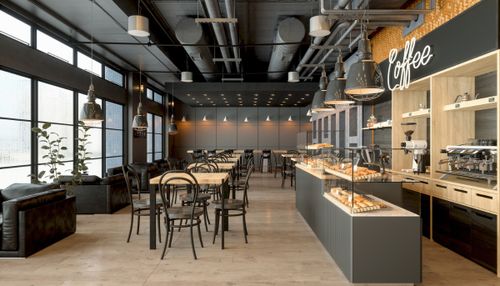
While functionality provides the structure for a business, aesthetics give it soul. Architectural accent lighting highlights the features that make a space feel premium and memorable, guiding the customer experience in retail or communicating quality in a hotel lobby.
Great commercial lighting design directs attention to featured displays and high-margin zones. This same principle drives sustainable commercial lighting decisions. When integrated with smart controls, accent lighting delivers a dramatic impact without waste.
Practical Examples: Retail, Restaurants, Hospitality, House of Worship, and Educational Institutions
Retail (branding and conversion)
In a retail setting, strategic lighting turns browsers into buyers. High CRI LEDs ensure product colors in commercial lighting are accurate, reducing returns for apparel and cosmetics. Scene adjustments for new campaigns can also make feature tables feel fresh.
Restaurants (ambiance)
Lighting sets the dining mood. A layered approach combines ambient, accent, and task lighting. Warmer Correlated Color Temperature (CCT) creates intimacy, while smart commercial lighting control systems allow transitions from a bright lunch spot to a cozy dinner setting.
Hospitality (guest experience)
Lighting shapes the guest journey from arrival. A welcoming entry with highlighted architecture feels intuitive. For an effective after-hours strategy, use automated lighting in corridors to maintain safety while lowering energy output during low-traffic periods.
House of Worship (congregational engagement)
Lighting in houses of worship directs attention and enhances connection. Smart commercial lighting control systems and automated lighting help manage the experience for both the congregation and any broadcast audience.
Schools (student engagement and campus scenes)
Proper commercial lighting in a school supports focus and safety. Smart commercial lighting control systems and automated lighting build consistency across classrooms, helping students engage and preventing distraction.
Quick Checklist: Accent Lighting That Looks Expensive (Without Wasting Energy)
- Create drama with contrast by using a focused beam on a dark background.
- Reduce glare by aiming fixtures away from direct sightlines.
- Match beam angles to the target, using narrow beams for artwork and wider ones for textured walls.
- Choose dimmable LEDs to maintain consistent light levels.
- Integrate accent zones into commercial lighting controls to avoid wasting energy.
Effective accent lighting shows attention to detail. Well-designed commercial lighting helps customers feel comfortable, encouraging them to stay longer.
Task Lighting for Workspaces: Enhancing Employee Focus
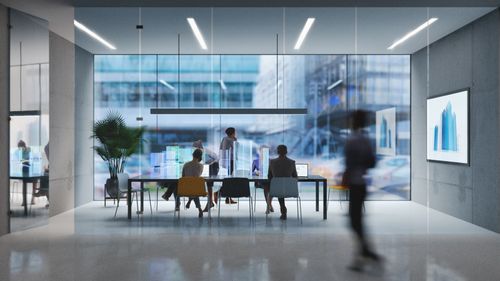
While general fixtures provide broad illumination, task lighting offers focused light precisely where needed. For an office, this means desk lamps or under-cabinet lights. A smart commercial lighting plan treats task lighting as a productivity tool, reducing eye strain and boosting focus. This strategy aligns with energy-efficient office lighting solutions 2026, proving comfort and cost savings can coexist.
How to Set Up Office Task Lighting That Improves Focus
Ready to boost focus with task lighting? Here’s a quick guide.
Place the task light to the side of your main work area to reduce screen glare.
Also, consider these points:
- Aim for uniform light on the desk surface to prevent eye strain.
- Choose flicker-free LEDs with stable dimming to avoid headaches.
- Pick the right tone for the task. Cooler light suits detailed work, while warmer tones are better for relaxed settings.
Niche Product Details That Matter for Workspaces
Choosing effective commercial lighting means looking at key specifications that impact comfort and productivity.
Key features include:
- UGR (glare control): Reduces visual discomfort from screen reflections, crucial for open-plan offices.
- High CRI (Color Rendering Index): Ensures accurate colors, vital for creative and print work.
- Quality drivers: Prevents distracting shimmers, uneven dimming, and buzzing.
- Integration readiness: Connects individual lights to smart commercial lighting control systems for scheduling and energy management.
Medical and High-Precision Environments: Task Lighting That Protects Accuracy
In clinics, labs, and inspection stations, task lighting is crucial for accuracy and safety, as poor lighting leads to fatigue and errors.
Specific benefits in high-precision settings
- Reduced visual errors: Uniform light helps staff spot fine details for tasks like lab labeling.
- Better color judgment: A high Color Rendering Index (CRI) is vital for accurately assessing tissues or product finishes under commercial lighting.
- Less eye fatigue during long procedures: Stable, flicker-free light improves focus and comfort.
- Cleaner ergonomics: Correctly positioned lighting reduces physical strain.
How to spec task lighting for precision work
Focus on these key specifications:
- Choose LEDs with a high CRI (often 90+) for color-critical jobs.
- Prioritize glare control to prevent hotspots on reflective surfaces.
- If using smart commercial lighting control systems, confirm task lights are compatible with the dimming protocols.
- Maintain uniform lighting across workstations to prevent eye strain as staff move between zones.
Industrial and Back-of-House: Task Lighting as Safety Infrastructure
In industrial settings like warehouses and production facilities, task lighting is crucial for safety and efficiency, reducing errors and boosting productivity.
- Enhanced Accuracy: Directed light on packing stations or assembly benches improves detail identification.
- Reduced Rework: Better visibility decreases rework, saving time and resources.
- Fewer Incidents: Proper illumination helps prevent accidents, creating a safer workspace.
Investing in commercial lighting delivers measurable operational benefits and paves the way for advancements like circadian-aware lighting.
Learn more: 6 Benefits of Investing in Circadian Lights
The Benefits of Human Centric Lighting for Workplace Productivity

Human-centric lighting syncs artificial light with natural daylight to support the body's internal clock. Unlike static office lighting that contributes to afternoon slumps, this system adjusts throughout the day. It starts with brighter, bluer light to boost alertness and shifts to warmer, softer tones to promote relaxation in the evening. By using tunable LEDs, businesses can mirror the sun's rhythm, improving employee well-being and productivity.
Deep Dive: How Human Centric Lighting Mimics Natural Daylight
A consistent circadian schedule supports natural energy levels. A common plan involves:
- Morning: Starts neutral, then brightens.
- Midday: Shifts to cool white light for focus.
- Afternoon: Dims and warms to maintain steady energy.
This approach is central to energy-efficient office lighting solutions 2026, combining smart LEDs with automated scenes to support employees and conserve energy.
How to Implement Human Centric Lighting Without Disrupting the Office
Implementation can be done in phases without a complete overhaul. Start with a pilot test in a single area to gather employee feedback on comfort and productivity.
A practical rollout involves these steps:
- Install tunable-white fixtures compatible with control systems.
- Program scenes for different times of the day (e.g., arrival, focus, late day).
- Collect feedback for a couple of weeks, noting comments on glare and comfort.
- Scale the system floor by floor using insights from the pilot.
Where Smart Controls Matter
When you connect this schedule to smart commercial lighting control systems, the benefits multiply through:
- Automation: Scenes run automatically without manual input.
- Efficiency: Daylight harvesting adjusts for natural light, saving energy.
- Insight: Reporting tools track commercial lighting performance for optimization.
This is about providing the right light at the right time. Implementing human centric lighting for workplace productivity turns your lighting into a daily advantage, helping teams stay sharp and energized.
Commercial Outdoor LED Security Lighting: Protecting Your Assets
A business's exterior is vital for first impressions, deliveries, and after-dark safety. This makes commercial outdoor LED security lighting a key part of any commercial lighting strategy.
Modern LEDs illuminate key areas with a clean, white light, improving visibility for both people and security cameras.
- Better Clarity: LEDs offer superior clarity over the yellow tone of older high-pressure sodium fixtures.
- Stronger Color Recognition: Crisp light helps accurately identify colors, which is crucial for security footage.
- Enhanced Safety: Brightly lit parking lots, walkways, and entry points create a safer environment.
How to Build a Safer Exterior Lighting Plan
A solid lighting plan balances security, comfort, and energy efficiency. This checklist helps find and fix blind spots without causing light pollution.
Exterior security lighting checklist
- Cover corners and transitions: Light up all entrances, side doors, dumpster areas, and back gates.
- Light the walking path: Ensure sidewalks and ramps are uniformly visible for pedestrian safety.
- Protect the loading zone: Improve visibility for after-hours deliveries to prevent accidents.
- Avoid glare into eyes and cameras: Use optics that direct light downward and outward.
- Use consistent color temperature: Uniform color improves camera clarity and looks more professional.
Integrating Outdoor LEDs With Automated Lighting and Smart Controls
Connecting outdoor LEDs to automated lighting allows for dynamic programming, like dimming lights after hours. Motion sensors and zoning conserve energy by activating lights only when needed and prioritizing brightness in critical areas.
Pairing fixtures with smart commercial lighting control systems improves management. These systems send alerts, offer centralized control, and report on energy usage.
Effective commercial outdoor LED security lighting shows a space is actively monitored. This strategy enhances safety and provides greater operational control through better commercial lighting.
Learn more: How to Set Up Outdoor Lighting in Your Business or Backyard
Conclusion: Evaluating Your Long-Term Lighting Strategy
Lighting is a key part of business strategy, impacting everything from costs to safety. The best lighting plans view commercial lighting as a system that blends efficient LEDs, smart controls, and thoughtful design.
The journey to sustainable commercial lighting begins with LED retrofits and adds smart controls. This approach can reduce lighting energy consumption by up to 60%, a strategic move that saves capital for other business priorities.
A Practical How-To: Evaluate Lighting Like a Long-Term Investment
Here’s a quick framework to help you decide what to fix first.
Step 1: Score each zone (1-5)
Walk through your facility and score each area on visual comfort, branding impact, safety, and energy waste.
Step 2: Upgrade in this order
Prioritize upgrades to maximize impact:
- Begin with an LED retrofit in high-use areas.
- Install controls in frequently empty spaces.
- Add accent layers in revenue-driving zones.
- Implement human centric lighting for workplace productivity for teams doing deep work.
- Address security with commercial outdoor LED security lighting.
Step 3: Require systems thinking
Ensure all upgrades work together. Smart commercial lighting control systems should integrate with automated lighting schedules and sensors for consistent savings.
Why DAVE’s Expertise Matters in 2026
Technology is only as good as its implementation plan. DAVE transforms simple "new lights" into true operating upgrades. We bring a practical automation mindset to lighting projects, turning sensors, scenes, and schedules into a seamless experience.
The future belongs to businesses that build productive, welcoming, and cost-predictable environments. Properly executed commercial lighting provides that edge. Choose a strategy that performs long after the installation crew leaves.
Learn more: How Smart Home Lighting Transforms Everyday Living
Frequently Asked Questions
Frequent commercial lighting problems include flickering, uneven brightness, and screen glare. Many businesses also suffer from over-lighting, which wastes energy. Poor color rendering can make products and interiors look dull.
The "golden rule" of lighting is to use layers. A solid lighting plan will combine ambient (general), task (focused), and accent (highlighting) lighting. For effective commercial lighting design, these layers should be controllable to adapt the space from day to night.
Switching to ENERGYSTAR® certified LED lights is the most reliable strategy. The U.S. Department of Energy states that these upgrades can slash energy use by up to 60%. Adding smart commercial lighting control systems further reduces costs by using sensors to match light with demand. Automated lighting also helps by scheduling lights for specific zones, preventing unnecessary after-hours use.
The best retail lighting uses high-CRI LEDs with layered accent lighting to direct customer focus and ensure products look their best. Adaptable scenes for displays and fitting rooms can enhance brand mood and promotions. This strategy is central to energy efficient office lighting solutions 2026. Smart commercial lighting controls save energy by illuminating key revenue-driving zones instead of the entire store.
Why Trust DAVE?
With 25 years of experience in sales, design, and installation, DAVE has built a reputation for quality, expertise, and customer care. Unlike other retailers that rely on subcontractors, our in-house installation teams ensure precision and professionalism in every project. Our non-commissioned sales staff focuses on educating customers—without the jargon—so you can make informed decisions. Through ongoing training and strong vendor relationships, we stay ahead of industry trends, offering the latest technology at the best prices. Plus, with our 30-day price guarantee, you get top-tier service and the lowest price, every time. For expert advice and professional installation in Buffalo and Rochester, New York, visit Dave Digital and take the first step toward transforming your home.
Discover Commercial Lighting Solutions at DAVE
At DAVE, we make shopping easy with a wide range of in-stock products, financing options, and professional delivery & installation to ensure a seamless experience. Whether you're a homeowner, business owner, builder, or designer, we offer expert support for residential solutions and commercial solutions, repairs, and custom solutions. Take advantage of our exclusive member perks, special promotions, and clearance/outlet catalogs for unbeatable deals. Need help? Submit a form online, and our team will assist you with finding the perfect products. Shop smarter with DAVE—where quality, service, and savings come together!